Guru Criticism
James Arthur Ray's Sweat Lodge Deaths: What Happened at Spiritual Warrior
By Beyond Growth · 13 July 2026
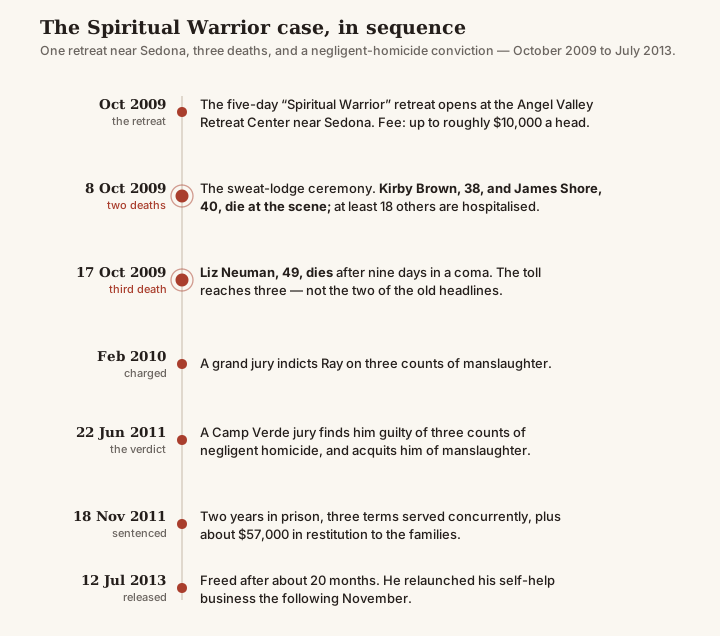
How many people died at James Arthur Ray's sweat lodge, and was he convicted? Three people died — James Shore and Kirby Brown at the scene on 8 October 2009, and Liz Neuman nine days later — after the sweat-lodge ceremony that closed Ray's $10,000 "Spiritual Warrior" retreat near Sedona, Arizona. At least eighteen more were hospitalised. In June 2011 an Arizona jury convicted Ray of three counts of negligent homicide; he served about twenty months and was released in July 2013. The old headline that the event "kills 2" undercounts it: the toll was three.
Three years before this happened, James Arthur Ray was a face on a screen telling people the universe would give them whatever they focused on. He was one of the teachers in The Secret, the 2006 film and book that sold tens of millions of copies on a single promise: that your thoughts pull events toward you, and that the only thing standing between you and the life you want is the quality of your belief. The film made minor stars of its contributors. Ray parlayed it into a bestselling book, appearances on Oprah and Larry King Live, and a live-events business that could charge thousands of dollars a seat.
On 8 October 2009, in a rented retreat centre in the Arizona desert, that business killed three people.
This is not a lurid story, and it should not be told as one. It is a plain, well-documented account of how a self-help event ran a group of paying, trusting adults past the point their bodies could take, and kept them there. What follows is drawn from news reporting and the court record. Every death, every charge, and every date is a matter of public record, cited as we go. We are careful with it because the people at the centre of it were real, and they had been told, in advance and by a man they were paying to trust, that feeling as though they might die was not a warning to heed but the very thing they had come for.
| How Spiritual Warrior was sold | What the ceremony actually was |
|---|---|
| A five-day journey to "play full on" and break through your limits | A five-day retreat ending in a heat exposure lasting about two hours |
| A cleansing "vision quest" and fast | Roughly 36 hours with little food or water before entering the lodge |
| A sacred sweat-lodge ceremony | A low, unventilated, tarp-and-blanket structure packed with more than 50 people |
| Distress reframed as spiritual progress | Heat stroke, kidney failure and unconsciousness, reframed in real time as a breakthrough |
| A test you were assured you would survive | Three people did not survive it |
What happened at James Arthur Ray's sweat lodge?
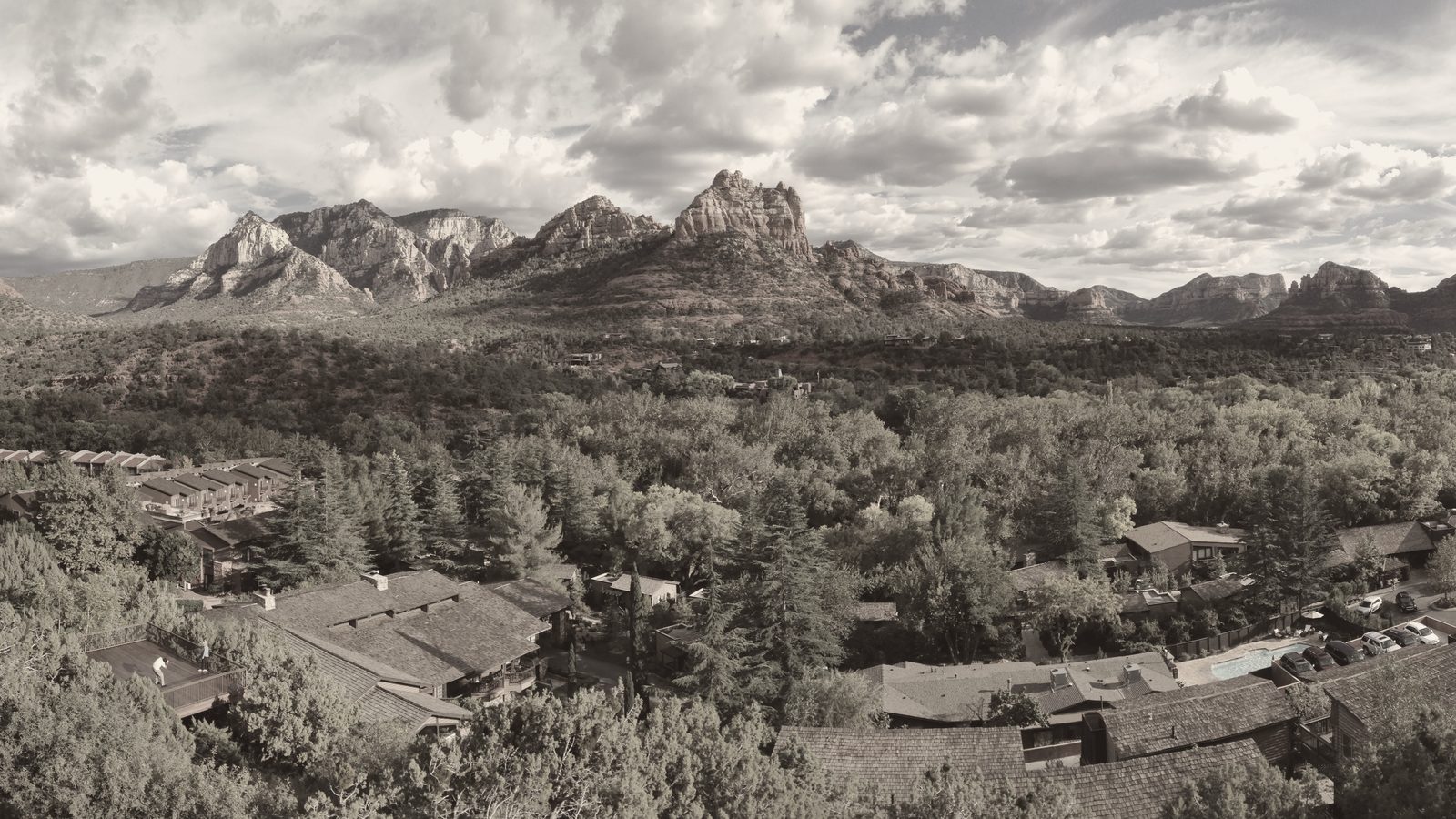
The sweat lodge was the finale of Ray's "Spiritual Warrior" retreat, a five-day programme held at the Angel Valley Retreat Center, a few miles outside Sedona, Arizona. Participants had paid up to roughly $10,000 each to be there. By the time they reached the lodge on the afternoon of 8 October 2009, they had already been put through a demanding sequence: a "vision quest" that involved being left alone in the desert, and about 36 hours with very little food or water. Then more than fifty of them filed into a low, dome-shaped structure of tarps and blankets, built over a pit of fire-heated rocks.
Ray ran the ceremony himself. Water was ladled onto the hot rocks to fill the enclosed space with steam, round after round, and the temperature climbed to a point that was, by every account, dangerous. People began to struggle to breathe and to lose their bearings. Some vomited. Some passed out. The reporting and later testimony describe a scene that, in the final rounds, had crossed from ordeal into emergency: participants being dragged out barely conscious, volunteers giving CPR on the ground outside, people lying "lifeless" in the dirt while the ceremony was still going.
Two things make this more than a tragic accident of heat. First, Ray had told the group in advance that this sweat lodge would be more intense than others they might have done, and that inside it they could feel "like [they] are going to die" — framing the sensation of the body failing not as a warning to heed but as a threshold to push through. Second, when people did collapse, some were not immediately taken to safety. Two of those who died fainted and were, according to reporting on the case, left inside the structure rather than pulled out. The ordinary human reflex — someone is unconscious, get them out, get help — had been quietly overridden by the logic of the event, in which distress was the point and quitting was failure.
How many people died at the sweat lodge?
Three people died. It matters to say the number plainly, because it is often said wrong.
Kirby Brown, 38, from Westtown, New York, and James Shore, 40, from Milwaukee, both died on the day. They collapsed inside the lodge and could not be revived; both were pronounced dead after being taken to hospital, having suffered fatal heat stroke. A great many contemporaneous headlines stopped there, at two deaths, and that number — the one embedded in the old web address for this very story — has followed the case ever since.
But the toll was not two. Liz Neuman, 49, from Prior Lake, Minnesota, did not die at the scene. She slipped into a coma and was kept on life support at a Flagstaff hospital, and on 17 October 2009, nine days after the ceremony, she died without regaining consciousness. She was, by accounts of those who knew her, a devoted long-time follower of Ray's — which is its own kind of weight to carry. With her death the count reached three, and three is the number the criminal case was ultimately built on: Ray was charged and convicted over Brown, Shore and Neuman.
Alongside the three deaths, at least eighteen other people were hospitalised — some accounts of the case put the figure higher — with injuries including burns, severe dehydration, breathing difficulty, elevated body temperature and kidney failure. These were not people who had wandered into danger. They had paid a premium, prepared as instructed, and trusted the man running the room.
Who was James Arthur Ray, and why did people trust him?
To understand how a room full of capable adults could be talked past the edge of physical safety, you have to understand who was talking. Ray was not a fringe figure. He was, at the time, one of the more successful operators in the mainstream self-help business, and his authority in that room had been built by real institutions of popular culture.
His breakthrough was The Secret. Being one of its featured teachers put him on television and on bestseller lists; his 2008 book Harmonic Wealth sold well, and he moved into the lucrative tier of the industry that sells not books but experiences — multi-day, high-priced live events pitched as transformation you cannot get from reading. Spiritual Warrior was the top of that ladder. The five figures it cost were not incidental to its appeal; the price was part of the promise, a signal that this was the serious, no-excuses version, for people ready to "play full on."
That is the machinery worth naming, because it is the machinery of the whole genre, not one bad actor. A charismatic figure is validated by a famous film, a famous book and famous television. The validation lets him charge a lot. The high price selects for people who are financially and emotionally invested in getting their money's worth, which means invested in not quitting. And the ideology sold on stage — that limits are mostly mental, that discomfort is the feeling of growth, that the people who break through are simply the ones who refused to stop — is precisely the ideology that, inside a superheated, unventilated tent, tells you to ignore the one organ system screaming the truth. The belief that had been the product for five days became, in the final two hours, the thing that kept people from walking out.
What actually made the sweat lodge lethal?
It is tempting to file this under freak accident: a ceremony got too hot, tragically. That framing is too kind, and the jury did not accept it. What made the lodge lethal was not only heat. It was heat plus a system that had systematically removed every off-ramp a person would normally use to save themselves.
Consider what a healthy version of "an intense experience" keeps in place. You can leave when your body tells you to. The people running it treat collapse as an emergency, not a milestone. Nobody has spent five days and $10,000 establishing that stopping is for the weak. Warning signs — nausea, confusion, a pounding heart, the specific animal fear that you are in real danger — are read as warning signs. Every one of those safeguards was, in this ceremony, either absent or inverted.
The inversion is the heart of it, and it is documented. Kirby Brown, by her own family's account, was a level-headed, safety-conscious woman who ignored her body's warnings because she had been led to believe they were the sensations of a spiritual breakthrough rather than the sensations of dying. That is not a failure of her intelligence. It is exactly what the event was designed to produce: a frame in which the data your body sends to keep you alive gets relabelled, in advance and by an authority you paid to trust, as the very thing you came for. Once "I feel like I might die" has been pre-defined as the doorway to transformation, the feeling stops functioning as an alarm. Ray had told them they would feel that way. When they did, the feeling confirmed the promise instead of contradicting it.
This is the specifically self-help mechanism at work, and it is worth seeing clearly because it operates, in milder forms, far beyond one sweat lodge. The industry's core move is to relocate every limit into the mind — to insist that the wall is never in the body or the world, only in your belief about it. Most of the time that move just sells books and wastes money. In an unventilated tent in the desert, with a fasted, dehydrated crowd and a man assuring them their distress was progress, the same move deleted the single precondition that keeps intense experiences survivable: the permission, and the reflex, to stop.
Was James Arthur Ray convicted?
Yes. This is the part of the story that is fully settled in law, and it should be stated without hedging.
In February 2010, a grand jury in Yavapai County, Arizona, indicted Ray on three counts of manslaughter, one for each death. The trial opened in Camp Verde in the spring of 2011 and ran for months. On 22 June 2011, the jury delivered its verdict: guilty of three counts of negligent homicide, and not guilty of the more serious manslaughter charges.
The distinction matters, and it is not exoneration — if anything the negligent-homicide finding is a precise description of the failure. Manslaughter, in Arizona, would have required that Ray recklessly caused the deaths, consciously disregarding a risk he was aware of. The jury did not find that. What they did find was negligent homicide: that Ray failed to perceive a substantial and unjustifiable risk that a reasonable person would have perceived, and that people died because of it. In plain terms, the jury concluded he should have seen the danger and did not. He ran an event that killed three of his own paying clients, and the legal system's verdict was not "he meant to" but the arguably more damning "he should have known, and it was his job to know."
On 18 November 2011, Judge Warren Darrow sentenced Ray to two years in prison — three concurrent terms, one for each count — and ordered him to pay roughly $57,000 in restitution to the victims' families. Separately, civil lawsuits brought by the families had already been settled for a total of more than $3 million before the criminal trial. Ray served the bulk of his sentence and was released under supervision on 12 July 2013, after roughly twenty months. Three deaths; about twenty months. Reasonable people can hold that arithmetic and feel it does not balance.
What happened to James Arthur Ray after prison?
He tried to go back to work. In November 2013, only months after his release, Ray relaunched his self-help business — announcing his return, of all places, on prime-time cable television. In the years that followed he pursued a comeback as a coach and speaker, and, in interviews, sought a public narrative of a man who had suffered and been humbled and had things to teach about resilience. The attempt to re-enter the industry that had produced the tragedy struck many, understandably, as grotesque, and it was met with anger by families who had buried people.
The most durable thing to come out of the case is not Ray's second act but the response of the bereaved. The mother and sister of Kirby Brown founded SEEK Safely, a non-profit that works to make the self-help and personal-development industry safer through education, advocacy, and legislation — pressing, among other things, for rules that would require unlicensed self-help providers to disclose the risks of what they sell. It is a quiet, unglamorous, evidence-first kind of work, which makes it roughly the opposite of a stage with a headset microphone on it. James Arthur Ray died in Henderson, Nevada, on 3 January 2025, at the age of 67. The deaths he was convicted of are the first line of every obituary.
What the sweat lodge deaths actually teach
It would be easy, and wrong, to treat this as a story about one uniquely reckless guru — a bad apple who can be condemned and set aside, leaving the rest of the industry untouched. Ray was not an aberration from the logic of high-priced transformational self-help. He was that logic, followed to its end, in a place where the body could not be argued with.
The whole promise of the genre is that your limits are illusions your mind imposes, and that the brave, the committed, the ones who really want it, push through. Sold gently, at an airport bookstall, that promise is mostly harmless and occasionally even useful, because attitude does affect how consistently you show up. But the promise contains no built-in stopping rule. It has no way of telling you when "push through the discomfort" has stopped meaning finish the workout and started meaning ignore your kidneys shutting down. It treats every limit as the same kind of thing — a belief to be overcome — when some limits are beliefs and others are physics. Inside the sweat lodge, that missing distinction was fatal. The event could not tell the difference between the fear that holds you back and the fear that is trying to keep you alive, because it had spent five days and a great deal of money teaching everyone in the room to distrust exactly that fear.
So the lesson is not "don't do sweat lodges," and it is certainly not "distrust all self-improvement." It is narrower and more useful than that. Be most careful precisely when someone in authority tells you that the signal your body or your judgement is sending — this is too much, I need to stop, something is wrong — is not a signal to heed but a barrier to break. That reframe is the single most dangerous instrument the industry owns. It is what turns a paying customer into someone who stays seated while the person next to them stops breathing. Kirby Brown, James Shore and Liz Neuman were told, in effect, that feeling like they were going to die was the point. They believed a man they had every mainstream reason to trust. Three of them were right about the dying, and the record — a conviction, a sentence, and their three names — is what remains to say so plainly.
Frequently asked questions
How many people died at James Arthur Ray's sweat lodge?
Three. James Shore, 40, and Kirby Brown, 38, died at the scene on 8 October 2009. Liz Neuman, 49, died on 17 October after nine days in a coma. The often-repeated figure of two is wrong because it counts only the deaths on the day; the toll reached three once Neuman died.
Was James Arthur Ray convicted over the sweat lodge deaths?
Yes. On 22 June 2011 an Arizona jury found Ray guilty of three counts of negligent homicide, and acquitted him of the more serious manslaughter charges. He was sentenced to two years in prison and released under supervision on 12 July 2013, after roughly 20 months.
Where and when did the sweat lodge deaths happen?
At the Angel Valley Retreat Center near Sedona, Arizona, on 8 October 2009, during the sweat-lodge ceremony that closed Ray's five-day "Spiritual Warrior" retreat. Participants had paid up to about $10,000 to attend.
Was James Arthur Ray in The Secret?
Yes. Ray was one of the teachers featured in the 2006 film The Secret, which launched him from a working self-help speaker into a bestselling author who appeared on Oprah and Larry King Live. That fame is part of why the Spiritual Warrior retreat could charge what it did.
What is SEEK Safely?
SEEK Safely is a non-profit founded in 2014 by the mother and sister of Kirby Brown, who died in the sweat lodge. It campaigns to make the self-help industry safer through education, advocacy and legislation, and asks self-help providers to sign a promise of ethical conduct.
Sources: James Arthur Ray (Wikipedia); "Self-help guru's sweat lodge ceremony turns deadly" (History); "James Arthur Ray… convicted for the 'sweat lodge' deaths of 3 people in 2009, has died" (Sedona Red Rock News); "Self-help guru convicted in sweat lodge deaths" (NBC News); SEEK Safely (the non-profit founded by Kirby Brown's family).